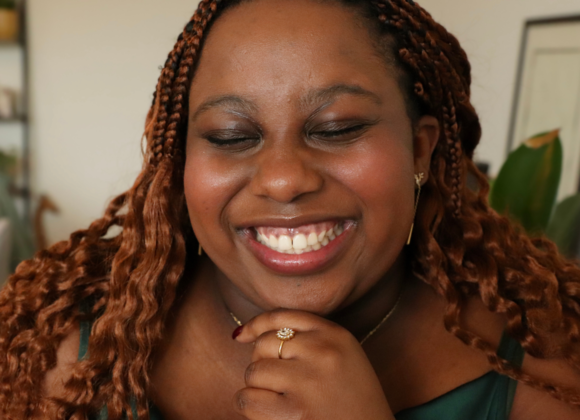
This blog post answers the question “Who am I really?”
There are moments in life when everything goes quiet — when the noise of daily responsibilities fades just enough for a deeper question to surface:
Who am I really?
It’s a question that often appears during seasons of reflection. When you look at your life and start wondering what you’ve achieved, what you enjoy, where you’re going, and whether the person you are today truly reflects the person you feel called to become.
Self-discovery isn’t about finding a final answer. It’s about learning how to listen, observe, reflect, and grow — again and again.
In this post, I want to share practical, honest, and faith-anchored ways I learned to get to know myself truly — not by overthinking, but by observing, reflecting, choosing, and giving myself grace.
If you’ve ever felt disconnected from yourself, stuck between who you are and who you want to be, this is for you.
Why Getting to Know Yourself Isn’t as Simple as It Sounds
Getting to know yourself is never a one-time exercise.
You are shaped by:
- Your values
- Your experiences
- Your decisions
- Your habits
- Your thoughts
- Your faith
And because life keeps changing, you keep changing too.
Self-discovery isn’t about fixing yourself — it’s about understanding yourself, so you can move through life with intention instead of confusion.
How to get to know yourself
1. Observe Yourself in Different Scenarios
One of the most powerful ways I got to know myself was by placing myself in different situations and observing how I showed up.
How do you behave in groups?
Do you shrink or expand?
Do you speak freely or hold back?
Do you feel safe being yourself?
Watching my behavior in social settings showed me:
- How confident I truly felt
- Where I felt comfortable
- Where I still felt insecure
Instead of judging myself, I started observing myself — almost like a neutral witness.
That’s how I learned:
- What parts of myself needed acceptance
- What parts of myself needed growth
Action step:
Put yourself in new environments. Then reflect later — without shame. Awareness always comes before change.
2. Sit With Your Own Thoughts (Yes, in Silence)
Another life-changing practice was learning how to sit with my own thoughts.
Silence can feel uncomfortable at first. But it reveals what’s really happening inside you.
I began noticing:
- The phrases I repeated to myself
- The assumptions I carried
- The internal conversations shaping my confidence
Eventually, I started writing those thoughts down — and that’s when things shifted.
When you see your thoughts on paper, you can confront them.
And when you confront them, you can change them.
By intentionally choosing inner conversations that aligned with the person I wanted to become, I became stronger, calmer, and more grounded.
Ask yourself:
Are the thoughts you repeat helping you become who you’re called to be?
3. Receive Feedback Without Giving Away Your Power
Feedback can either refine you or break you — depending on how you handle it.
When people commented on my behavior, I made a conscious decision:
- Not to get defensive
- Not to explain myself
- Not to argue
Instead, I checked their feedback with myself first.
If it aligned with the person I wanted to become, I adjusted quietly.
If it didn’t, I let it go — without resentment.
Changing in silence keeps the power with you.
You don’t owe everyone an explanation for your growth.
4. Choose Who You Want to Become — On Purpose
One of the most important moments in my journey was choosing who I wanted to become.
Not vaguely. Not someday.
But intentionally.
I went deep:
- My values
- My speech
- My behavior
- My boundaries
- The way I move through the world
Everything had to align with the person I described and wrote down.
Growth becomes clearer when you have a direction.
Otherwise, you’re just reacting to life instead of shaping it.
5. Be Honest About Your Shortcomings
You cannot grow from what you refuse to acknowledge.
Getting to know myself required brutal honesty — especially about my weaknesses.
Instead of avoiding them, I asked:
- Where do I struggle?
- What patterns keep repeating?
- What do I need to adjust in my life to support myself better?
Self-awareness is not self-criticism.
It’s self-respect.
When you accept your limitations, you can design a life that supports your growth instead of fighting against yourself.
6. Choose the Path of Least Resistance (Especially at the Start)
The gap between who you are and who you want to be can feel overwhelming.
That’s why I chose the path of least resistance — not because I lacked ambition, but because I wanted sustainability.
Instead of tackling everything at once, I asked:
- What is the smallest step I can take right now?
- What change feels doable today?
One step at a time builds momentum.
Momentum builds confidence.
Confidence builds consistency.
This approach helped me keep going — instead of burning out halfway.
7. Allow Yourself to Just Be
Some days, growth means rest.
There were moments when I had to accept the person I was — without pressure, without fixing, without striving.
Grace is part of self-discovery.
You are allowed to:
- Pause
- Feel
- Be human
Growth that lacks kindness doesn’t last.
8. Choose Your Identity in Christ Over Opinions
Not all criticism is constructive.
Some of it is just noise.
Choosing my identity in Christ over what others said about me gave me clarity and peace.
When your identity is rooted in faith, improvement becomes purposeful — not reactive.
You grow because you’re called higher, not because you’re trying to prove yourself.
9. Accept That You Won’t Always Know What to Do
There is so much pressure to have answers — all the time.
But maturity also looks like saying:
“I don’t know yet, but I’ll look into it.”
Trying to appear certain often leads to unnecessary mistakes.
Humility leads to wisdom.
10. Allow Yourself to Be a Student

You are not meant to know everything.
Adopting a learner’s mindset changed how I approached life:
- I asked questions
- I researched
- I observed
- I stayed curious
Growth accelerates when you stop pretending and start learning.
11. Take Up Space — FULLY
For a long time, many of us learn to make ourselves smaller.
We soften our voices, dilute our opinions, and shrink our presence to avoid discomfort — ours or someone else’s.
But taking up space is not arrogance.
It’s self-respect.
Taking up space means:
- Setting boundaries without guilt
- Saying what you think without rehearsing it ten times
- Laughing loudly without apologizing
- Loving openly without fear of rejection
- Dressing in a way that makes you feel confident and fully yourself
It also means allowing yourself to make mistakes — to say something awkward, to try and fail, to learn publicly instead of hiding until you feel “ready.”
You were never meant to tiptoe through life.
You were meant to inhabit it.
When you take up space, you teach others how to treat you — and you teach yourself that your presence matters.
Ask yourself:
What would change if I allowed myself to be seen?eing visible.
Where am I still shrinking?
12. Accept Your Own Pace
One of the fastest ways to disconnect from yourself is comparison.
The moment you measure your journey against someone else’s timeline, clarity fades and pressure takes over.
Everyone moves through life at a different pace — emotionally, spiritually, mentally, and practically.
That pace is shaped by experiences, seasons, responsibilities, healing, and calling.
Your pace is not wrong.
It’s personal.
Accepting your pace means:
- Letting go of arbitrary deadlines
- Trusting that growth is still happening, even when it’s slow
- Releasing the urge to “catch up”
- Honoring where you are without judgment
God is never rushed — and neither are His plans for you.
When you accept your pace, you stop fighting yourself and start cooperating with the season you’re in. And growth becomes lighter when it’s not forced.
13. Speak Up for Yourself
There is a version of “peace” that looks calm on the outside but is exhausting on the inside.
It’s the kind of peace that comes from silence, avoidance, and swallowing your truth.
But real peace doesn’t require self-erasure.
Speaking up for yourself is not conflict-seeking — it’s self-protecting.
When you don’t express your needs, boundaries, or discomfort, resentment quietly builds. And over time, that resentment turns into burnout.
Speaking up can look like:
- Saying “that doesn’t work for me”
- Expressing how something made you feel
- Asking for clarification instead of assuming
- Saying no without over-explaining
You are allowed to advocate for yourself.
Your voice deserves space in your own life.
Learning to speak up is learning to choose long-term peace over short-term comfort.
14. Don’t Hold Back on How You Love
Many people learn to love cautiously — with walls, limits, and emotional brakes — often because they’ve been hurt before.
But love is not meant to be given from depletion or fear.
It’s meant to flow from abundance.
When you consistently fill your own cup — through rest, prayer, boundaries, and self-care — you gain the capacity to love boldly.
Loving openly means:
- Expressing appreciation without hesitation
- Showing up fully for the people you care about
- Offering kindness without calculating the return
- Letting joy be visible
Loving this way doesn’t make you weak.
It makes you rooted.
When you love from overflow, you don’t lose yourself — you expand. And your life becomes richer, warmer, and more meaningful because of it.
15. Take the Risks Required to Become Who You Want to Be
Your brain is wired to keep you safe, not to help you grow.
That’s why it often pushes you toward familiarity, comfort, and predictability — even when those things no longer serve you.
But growth requires risk.
Not reckless risk — intentional risk.
The kind of risk that says:
- I’ll apply even if I might be rejected
- I’ll speak up even if my voice shakes
- I’ll try even if I might fail
- I’ll leave what’s comfortable for what’s aligned
Every meaningful version of yourself exists on the other side of discomfort.
If you always choose the safe route, you may avoid failure — but you’ll also avoid becoming.
Ask yourself:
- What risk am I avoiding that keeps calling me?
- What version of me is waiting on the other side of courage?
You don’t need certainty to move forward.
You need faith, willingness, and one brave step.
Conclusion: Who You Are Is Revealed Through Becoming
So — who are you really?
You are not just the sum of your past experiences, your mistakes, or the version of yourself that learned to survive. You are also not defined by the opinions of others, the expectations placed on you, or the roles you’ve outgrown.
You are revealed through how you move through life.
Through the way you observe yourself in different situations.
Through the conversations you have with yourself in quiet moments.
Through the feedback you choose to integrate — and the criticism you choose to release.
Through the values you live by, the boundaries you set, and the courage you practice.
Getting to know yourself is not about arriving at a fixed answer. It’s about building an honest relationship with yourself — one rooted in awareness, reflection, faith, and grace.
As you learn to sit with your thoughts, speak to yourself with kindness, accept your weaknesses, and choose the path that supports your growth, clarity begins to form. Not all at once, but step by step.
And when you choose your identity in Christ over external noise, something shifts. You stop striving to prove who you are and start growing into who you are called to be.
There will be days when growth feels exciting — and days when it feels slow. Days when you speak up with confidence — and days when you need to rest and simply be. Both are part of the process.
You are allowed to move at your own pace.
You are allowed to take up space.
You are allowed to love fully, learn openly, and take risks imperfectly.
Self-discovery doesn’t require certainty — it requires willingness.
Not pressure — but presence.
Not perfection — but honesty.
So if you’re still asking “Who am I really?”, know this:
You don’t find the answer by standing still.
You discover it by living — with intention, with faith, and with compassion for yourself.
And the beautiful truth is this:
Who you are is still unfolding — and that is exactly how it’s meant to be.
If you want to read more posts like this one, click here.
If you want to follow my day-to-day journey, follow me on Instagram here and Pinterest here.
Have a blessed week!
Big love,
Joy